
Cooling Systems That Work When Heat Hits
AC Repairs in Gulfport for systems failing to maintain comfortable indoor temperatures
When refrigerant leaks, frozen coils, or electrical faults cause your air conditioning system to lose cooling capacity, Silvers Comfort Services diagnoses and repairs residential AC equipment across Gulfport and the Mississippi Gulf Coast. Homes in this region depend on reliable cooling through extended summer months when outdoor temperatures regularly exceed comfortable indoor thresholds. Timely repairs restore not just comfort but also system efficiency, preventing compressor damage that occurs when units run continuously without adequate refrigerant charge or airflow.
AC repair involves identifying why cooling output has diminished or stopped entirely. Technicians test refrigerant pressures, inspect evaporator and condenser coils for blockages or ice formation, verify electrical connections and capacitor function, and measure airflow at supply registers. Poor cooling often traces back to restricted airflow from clogged filters or ductwork issues, while frozen coils typically indicate either low refrigerant levels or blower motor problems that reduce air circulation across the evaporator.
Request a diagnostic evaluation to determine what repairs your system requires and what cooling capacity will return once completed.
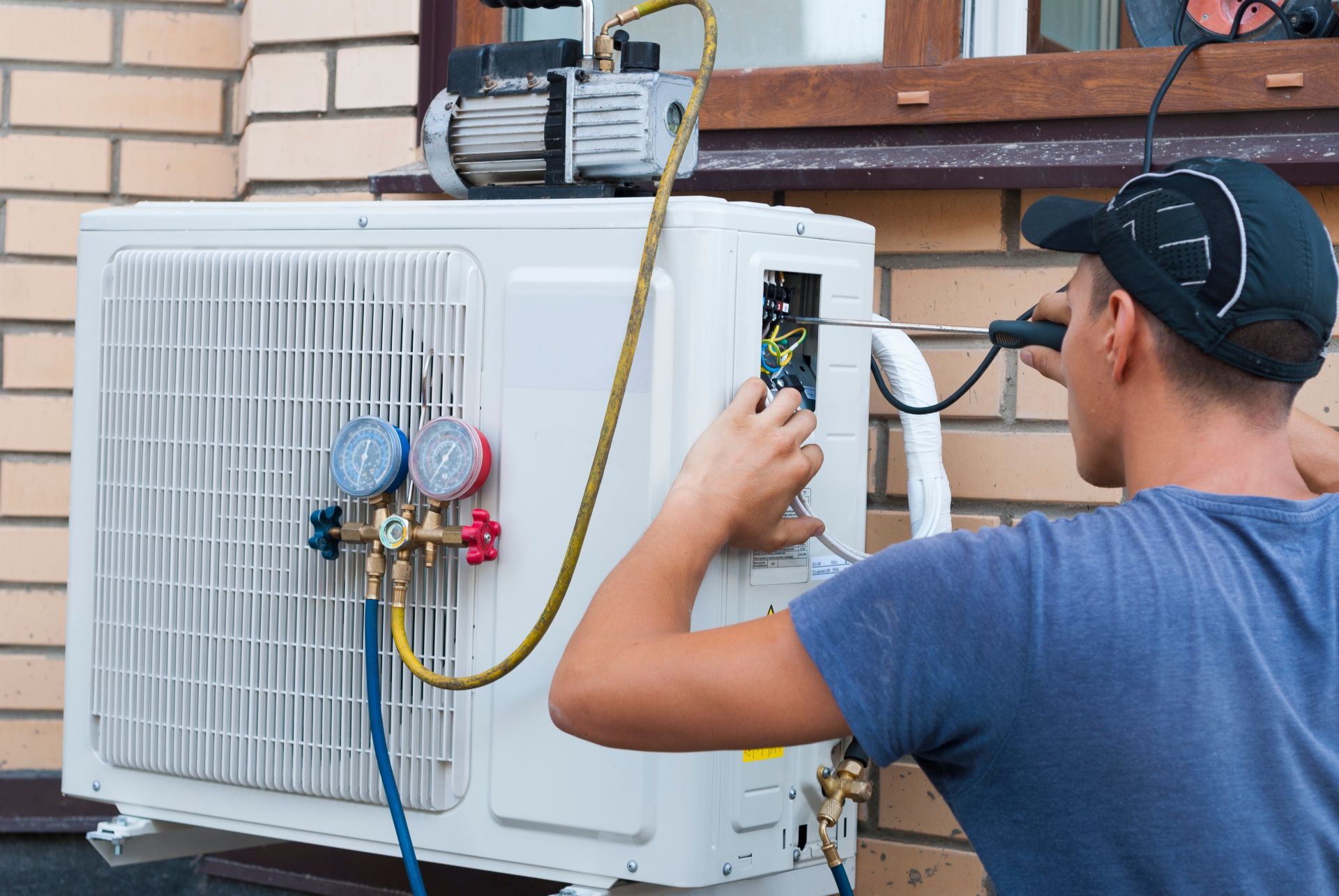
What Proper AC Repair Accomplishes
Accurate troubleshooting separates AC repair from guesswork. Technicians use manifold gauges to measure subcooling and superheat values that reveal whether refrigerant charge is correct, test voltage and amperage at motor terminals to confirm electrical components draw proper current, and inspect drain lines for blockages that cause water damage when condensate backs up into the air handler. Most major equipment brands follow similar diagnostic procedures, though specific fault codes and control board configurations vary by manufacturer.
After repairs are finished, you notice supply vents delivering cold air at the temperature differential your system was designed to produce, typically sixteen to twenty-two degrees cooler than return air temperature. Indoor humidity drops as the system runs through complete cooling cycles rather than short-cycling, and the compressor no longer runs continuously trying to reach thermostat setpoint. Energy consumption decreases once refrigerant charge is corrected and airflow restrictions are cleared, extending equipment life by reducing mechanical strain on the compressor and blower motor.
Repairs address the specific failure that caused cooling loss but do not replace components approaching end of service life from normal wear. If your condensing unit is more than twelve years old or shows signs of refrigerant leaks at multiple connection points, replacement may offer better long-term value than repeated repairs. Technicians provide equipment age and condition information so you can decide whether repair or replacement better fits your situation.
What Homeowners Ask About AC Repairs
AC systems fail more often during Gulfport's hottest weeks when outdoor temperatures stress components already weakened by age or poor maintenance. The questions below address repair decisions most property owners face when cooling stops.
What causes an AC system to freeze up during operation?
Frozen coils result from insufficient airflow across the evaporator, often due to dirty filters or closed supply registers, or from low refrigerant charge that drops coil temperature below freezing and causes moisture in the air to form ice that blocks remaining airflow.
How do technicians locate refrigerant leaks in AC systems?
Electronic leak detectors identify refrigerant escaping from line set connections, coil joints, or service ports, while UV dye injected into the system reveals slow leaks under black light inspection that electronic sensors miss.
Why does my air conditioner run constantly without cooling the house?
Continuous compressor operation without reaching thermostat setpoint indicates either severe refrigerant undercharge, failed compressor valves that prevent pressure buildup, or airflow restrictions so severe the system cannot transfer heat from indoor air to the refrigerant.
What repairs are covered when an AC stops working in Gulfport?
Service calls address refrigerant leaks and recharge, capacitor and contactor replacement, blower motor repair, drain line clearing, thermostat wiring faults, and control board diagnostics for systems showing error codes or failing to start.
When should I replace an AC system instead of repairing it?
If repair costs exceed half the price of replacement equipment, if the system uses R-22 refrigerant no longer manufactured domestically, or if the compressor has failed on a unit older than ten years, replacement typically delivers better value than temporary fixes on aging equipment.
Silvers Comfort Services handles AC repairs that restore cooling capacity before equipment damage becomes irreversible. Schedule repair service to address cooling problems while outdoor temperatures remain high and system runtime continues stressing compromised components.